
Dosing: How Much Is Enough? Finding the Sweet Zone in Persistent Pain
Sep 23, 2026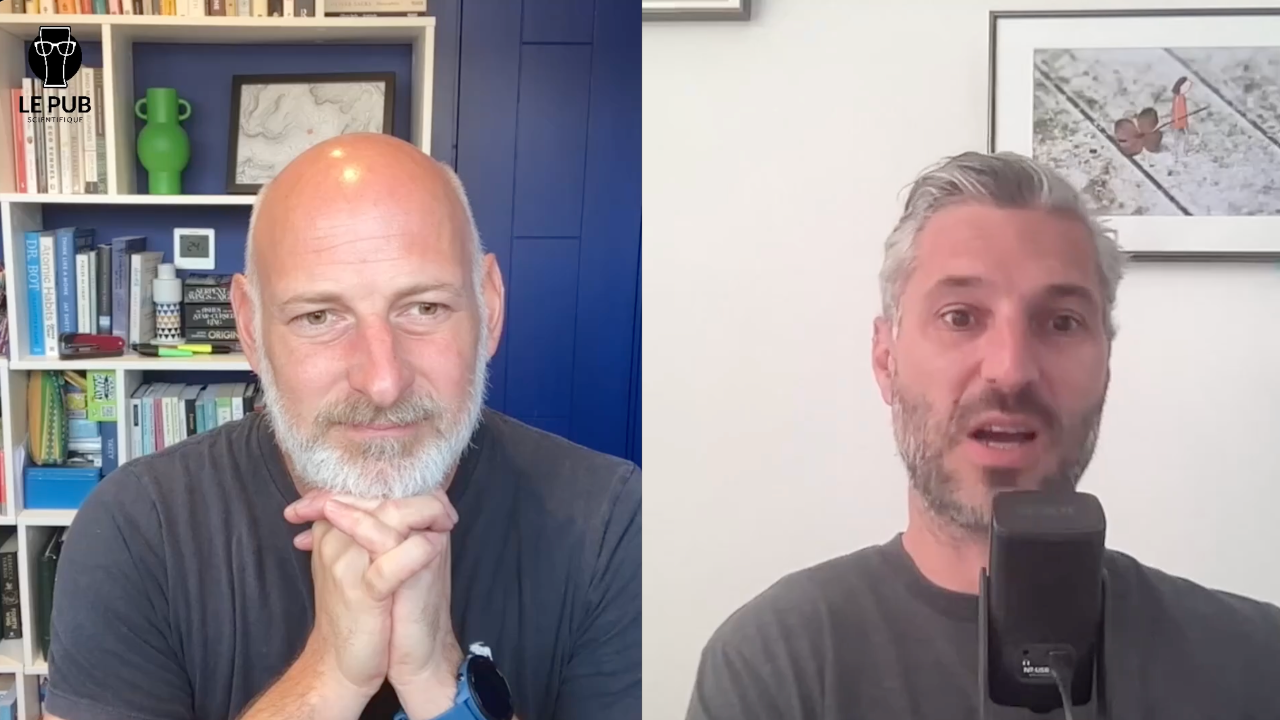
By Tim Beames & Bart van Buchem | Le Pub Scientifique
A man tells Tim he thinks he could walk for twenty minutes. Tim asks how he'd feel afterwards. "I'd be in pieces," the man says. "Absolutely ragged."
So twenty minutes goes in the bin. Not because twenty minutes is wrong, but because if the prediction is that it will leave you wrecked, the experience is almost guaranteed to confirm it. And the next time someone suggests a walk, the memory of being ragged is what comes up first. The dose didn't just fail, it made the next attempt harder.
This is the conversation that sits underneath every other conversation in pain rehabilitation. You can understand agency. You can see the shrinking world. You can embrace playfulness and creativity. But if you get the dosing wrong, too much, too little, too fast, too rigid, none of it lands the way it should.
In our latest episode of The Pain Podcast, we tried to do something that's rarely done well: talk honestly about the clinical judgment behind how much is enough. What follows draws on that conversation.
Cost-benefit analysis: a simple frame for a complex problem
Tim frames dosing as a cost-benefit analysis, and it's a useful starting point because it makes explicit something that's usually implicit. Every therapeutic activity has a cost; physical effort, emotional energy, time, risk of flare-up, disruption to routine. And a potential benefit. The clinical task is figuring out how to minimise the cost while maximising the likelihood that the benefit actually lands.
For some people, the cost side dominates. They've had traumatic experiences with exercise. They've pushed through boom-bust cycles that have taught them, through painful repetition, that doing more leads to suffering. For these people, the first priority is reducing cost - making the entry point so gentle that it barely registers as a challenge. For others, the cost is manageable and the focus is on building consistency around the benefits and supporting them to maintain it.
The key insight is that this isn't a fixed calculation. It changes day to day, week to week, sometimes hour to hour. The sweet zone - the range where the dose is enough to create benefit without triggering a setback - isn't a single point. It's a zone, and its width varies depending on everything else going on in that person's life and body.
Clinical scenario: the man who walked for fifteen minutes
Tim's approach with his walking patient illustrates the principles clearly. Rather than prescribing a distance or a time, he started with the patient's own prediction. How far do you think you could comfortably walk? The man said twenty minutes but acknowledged he'd be destroyed afterwards.
So they landed on fifteen. Not because fifteen is the "right" number, but because it sat within a range where the man was likely to finish and think: I could have done a bit more. That feeling, the sense that you had capacity left over, is worth its weight in gold. It means the prediction gets updated positively. It means the next walk feels less threatening. It means consistency becomes possible.
Tim is explicit about this with his patients. He'd rather someone finishes a walk and feels they could have gone further than finishes and never wants to do it again. Erring on the side of caution isn't timidity. It's strategic. Because what you're building isn't fitness, not yet, not primarily. You're building predictability and trust. Trust between the person and their body. Trust that doing this thing won't destroy them. Trust that they can commit to it again tomorrow.
And something interesting happened with this particular man. After a few weeks of consistent, comfortable walks, he came back and said he'd done a couple of forty-five-minute walks and one that was nearly an hour. He'd naturally pushed into more because the foundation felt safe. Then he asked, almost apologetically; "Is that all right? Do I have permission?"
That question tells you everything about where he'd been. And the fact that he was asking it after voluntarily tripling his walking time tells you everything about where he was heading.
Preparation and recovery: the Usain Bolt principle
One of the most useful reframes in our conversation came from thinking about elite athletes. Tim made the point that Usain Bolt doesn't just rock up to the start line of a hundred metres. There's extensive preparation before and structured recovery after. The race itself is a fraction of the total effort.
The same principle applies to someone with persistent pain, even though the activity in question might be a fifteen-minute walk rather than a sprint. What happens before the activity; the preparation, the state of mind, the physical readiness, shapes how the activity is experienced. And what happens after; the cool-down, the rest, the reflection, shapes how it's remembered and whether it gets repeated.
Bart extended this further. Many people with persistent pain go into activities already on high alert - anxious, braced, monitoring. Combining that physiological state with an activity that's already challenging is a recipe for a bad experience. If you can shift the state of mind first, through breathing, through settling, through whatever works for that individual, the same activity becomes a fundamentally different experience. You're not changing the dose. You're changing the conditions in which the dose is received.
This is preparation that any clinician can build into their practice. It doesn't require extra time or equipment. It just requires asking: what state is this person in right now, and is that the right state for what we're about to do?
Consistency before progression
There's a tension in rehabilitation between the desire to progress and the need to consolidate. Tim's position, particularly with persistent pain, is clear: build consistency and predictability first, then progress. This is different from working with someone who doesn't have persistent pain, where gains tend to come more quickly and the system responds more predictably to increasing load.
For persistent pain, the early work is about creating a calm, predictable baseline that the person can trust. The walks are the same length. The routine is the same. The experience is reliably manageable. That predictability is itself therapeutic, it's updating the system's expectations about what activity means and what it leads to.
Progression comes when consistency is established and when it's led by the patient, not imposed by the therapist. Tim waits for signs that someone is ready; they're reporting that it felt easy, they're naturally doing more, they're asking if it's okay to push. That's the signal. Not a protocol that says "increase by ten percent in week three."
Clinical scenario: the tides
Bart shared a patient story that captures something rarely discussed in dosing conversations: the reality that chronic pain conditions move in waves, and the dosing has to move with them.
His patient was a woman whose symptoms made no obvious sense. She'd sleep terribly and then perform well during the day. She'd follow all the sleep advice and then feel worse. The correlations between what she did and how she felt were contradictory, and the contradiction was making both of them uncomfortable.
They eventually arrived at a metaphor that changed everything: tides. Her condition moved like the sea; sometimes the tide was high and sometimes it was low, and it didn't always correlate with anything she could identify or control. When the tide was high, she needed different dosing - gentler, more protective, more about maintenance. When the tide was low, there was room for higher dosing, more exploration, more challenge.
The breakthrough was retrospective. When they looked back with this framework, they could identify signs and patterns that told her where the tide was. Not perfectly, not with the precision of a protocol but enough for her to make reasonable decisions about what to do on any given day.
She was eventually discharged. She still had symptoms. But she didn't need Bart anymore, because what she'd learned wasn't a set of exercises, it was a way of reading her own condition and adjusting accordingly. That's dosing literacy, and it's arguably the most valuable thing a clinician can leave someone with.
Widening the lens
One of Tim's key points is that dosing conversations tend to be too narrow. The typical question is "how many reps of this exercise?" But if you widen the lens, dosing is really about someone's entire life through time.
He thinks about it across multiple timescales. What are the daily activities, the walking, the breathing exercises, the settling practices? What are the weekly ones, the social commitments, the slightly more challenging physical activities? What are the monthly ones, going out for a meal, visiting somewhere new? And what are the bigger, less frequent ones, a holiday, a significant social event?
Each timescale has its own dosing considerations. The daily stuff needs to be highly consistent and low-cost. The weekly stuff can tolerate a bit more variability. The monthly and beyond is where bigger enrichment and novelty live, the things that expand the world rather than just maintain it.
This reframe matters because it stops the dosing conversation from being only about exercise. For many people with persistent pain, the most important dosing question isn't "how many squats?" It's "how much life?" How much socialising is manageable? How much novelty? How much challenge across all domains, not just the physical?
The last rep shouldn't be the worst
Bart raised a principle from behavioural science that's deceptively simple: the last repetition, the last moment of a session, should not be the worst one. Whatever someone is doing, the final experience should be at least neutral, ideally positive. Because that's what gets encoded most strongly. That's what determines whether they come back.
This applies beyond exercise. If a therapy session ends with the patient feeling overwhelmed, confused, or worse than when they arrived, the dosing was wrong, regardless of what happened in the middle. The ending shapes the memory, and the memory shapes the prediction, and the prediction shapes the next engagement.
It's a useful clinical checkpoint. Before wrapping up any session, any activity, any exploration: where are they right now? If they're in a good place, stop. If they've tipped into discomfort, bring them back before they leave. The last taste of the session is the one that lingers.
Embodied cues: the body as a dosing guide
Tim described something that develops over time: the ability to use the body's own signals as a dosing guide. Lightheadedness, increased heart rate, sweatiness, a surge of fatigue - these are all cues that the system is being pushed. They're not emergencies, but they're information.
For many people with persistent pain, these cues have been either ignored (push through it) or catastrophised (something is terribly wrong). Neither response is helpful. The therapeutic work is in helping people notice these signals, sit with them, and use them as data rather than alarms. Over time, people become remarkably good at reading their own thresholds, knowing when they're approaching the edge of the sweet zone and when they've crossed it.
This is what makes dosing eventually self-sustaining. You're not trying to create someone who needs you to tell them how much to do forever. You're trying to create someone who can read their own body well enough to make those calls themselves. That's the long game.
Seven and a half reps
A small detail from the conversation that's worth highlighting: Tim uses deliberately unexpected numbers when dosing. Instead of "do ten reps," it's "how about seven and a half?" Instead of "every hour," it's "nine and three-quarters of the hours you're awake."
It's playful, it's memorable, and it does something subtle, it signals that this isn't a rigid protocol. It invites a reaction: "Seven and a half? That's a weird number." And that reaction becomes a conversation about what actually feels right, what's manageable, what they'd adjust. It turns a prescription into a shared decision.
Dosing works best when it's co-constructed. The person who has to live with the plan should have a hand in shaping it. Unexpected numbers are one small way of opening that door.
Where this leaves us
Across this series, we've explored agency, affordances, language, playfulness, and now dosing. If there's a single thread that runs through all of it, it's this: the work of rehabilitation in persistent pain is not about finding the right protocol. It's about building the conditions - relational, experiential, environmental - where someone can reconnect with their body, their life, and their sense of what's possible.
Dosing is the clinical judgment that calibrates all of that. Not a formula. Not a progression chart. A living, responsive, co-constructed conversation between two people trying to figure out how much is enough, right now, for this person, on this day.
Get it right and you build momentum. Get it wrong and you learn from it. Either way, you keep going.
This blog is based on an episode of The Pain Podcast by Le Pub Scientifique. Listen to the full conversation on Podbean, Spotify, or Apple Podcasts. For clinical action plans, treatment guides, and our full library of science sessions, visit lepubscientifique.com.
Le Pub Scientifique is where pain treatment gets real. We gather the world's most respected clinicians and researchers to share practical strategies that work. No boring theory, just proven techniques from clinicians who get remarkable results.
Stay connected with news and updates!
Join our mailing list to receive the latest news and updates from our team.
Don't worry, your information will not be shared.
We hate SPAM. We will never sell your information, for any reason.