
When Pain Shrinks Your World: How Environmental Enrichment Reopens What's Possible
Jul 15, 2026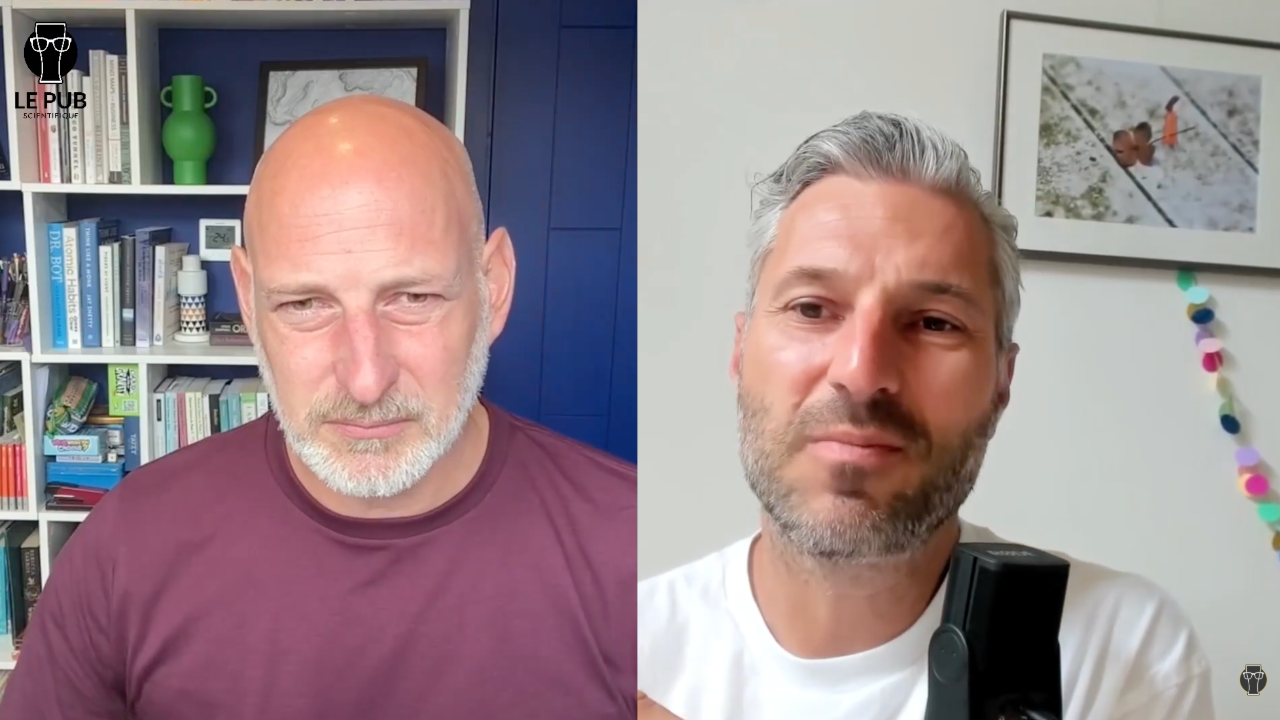
By Tim Beames & Bart van Buchem | Le Pub Scientifique
Here's something most clinicians have seen but few talk about directly: persistent pain doesn't just hurt. It shrinks the world.
Less movement. Less socialising. Less travel. Less spontaneity. Less confidence. Less exploration. Over time, the things a person used to do — the places they went, the people they saw, the way they moved through their day — quietly fall away. Not all at once. Not dramatically. Just a slow, steady contraction of what feels possible, until the life someone is living bears little resemblance to the life they had before.
In ecological psychology, this is described as a loss of affordances — a narrowing of the opportunities for action that a person perceives as available to them. And it's not just a side effect of pain. For many people, it is the problem. The pain may have started it, but the shrinking world is what sustains the suffering.
In a recent episode of The Pain Podcast, we explored environmental enrichment as a clinical framework for reversing this process — not by targeting pain directly, but by deliberately reopening the field of what's possible. What follows draws on that conversation.
It's not as simple as "just do more"
When a therapist suggests having a cup of tea in the garden with a bit of sunshine on your face, the natural response might be: couldn't you have thought of that yourself? Isn't it too obvious?
But that's precisely the point. For many people living with persistent pain, it's not obvious. It's not even on the radar. The capacity to imagine doing something enjoyable, restful, or novel has contracted alongside everything else. The garden might be beautiful and ten steps away, but in a world that has shrunk to managing symptoms and getting through the day, sitting in it with a cup of tea simply doesn't occur as a possibility.
This is what makes affordances more than a theoretical concept. It's a capacity issue. The opportunities might exist in the physical environment, but if someone can't perceive them — if they've dropped below the threshold of what feels available — they might as well not be there.
Clinical scenario: the man who couldn't imagine moving his arm
Bart encountered this vividly with a patient who had a nerve lesion in his upper arm. The man had lost sensation entirely and, with it, something else: the ability to even imagine the arm moving. When asked whether he could picture it, he said no. It wasn't difficult or effortful — it was impossible. The arm had dropped out of his mental landscape altogether.
This had real clinical consequences. Mirror therapy, which relies on the brain engaging with a visual representation of the limb, was deeply stressful for him. On reflection, it was probably the last thing on the hierarchy of exposure that should have been attempted, not the first. The starting point needed to be much further back — simply re-establishing that the arm existed as part of his body before asking him to interact with it.
The lesson extends well beyond nerve lesions. When someone's world has contracted, the things we ask them to do in therapy need to match where they actually are — not where we think they should be. Asking someone to "get out more" or "try something new" when they can't even conceive of what that would look like is the clinical equivalent of starting at the top of a hierarchy and wondering why they disengage.
Low hanging fruit: where enrichment actually starts
Tim's approach is to look for what he calls the low hanging fruits — the smallest, most achievable possibilities that create opportunities for success. Not a two-hour walk. Not a gym programme. Not a radical lifestyle change. Something closer to: could you drive to the park and have a five-minute walk? Could you have your morning tea outside? Could you text that friend you've been meaning to reach out to?
The logic here isn't that these things will cure pain. It's that each small action opens a little space, and that space can release pressure in parts of life the person didn't even realise were constricted. Tim describes it as a world that's been compacting in on you from all sides, with very little wriggle room anywhere. Opening up one small area — even slightly — can have effects that ripple outward.
This is also why the work has to be co-constructed. The clinician can suggest and guide, but the most powerful enrichment comes from the person themselves identifying what matters. The question isn't "what exercise should you do?" but something more like: what have you stopped doing that you miss?
Clinical scenario: the man who just wanted to drive
One of Tim's patients towards the end of last week was a man whose world had shrunk to the point where what he missed most was simply being able to get in his car and drive. Not drive to a destination. Not complete a journey. Just sit in the car, put some music on, and feel what it was like to be a driver again.
That became the starting point. Not "can you drive for an hour?" but "what about just sitting in the car in the front drive with a coffee and some music?" It's tiny. It's specific. And it's deeply meaningful to that person — which is exactly what makes it work.
This is environmental enrichment in practice. It's not about nature walks and mindfulness apps (though those can be part of it). It's about identifying what has been lost and finding the smallest credible way back toward it.
Prescribe an experience, not just an exercise
There's a phrase that came up in our conversation that feels worth repeating: if we prescribe exercise, we should not forget to prescribe an experience.
Many people with persistent pain have been through extensive rehabilitation. They've done the exercises. They have pages of programmes from different therapists over the years. And they've done them dutifully, without any of it feeling meaningful or enjoyable. The exercises are things to endure, not experiences to engage with.
The difference between an exercise and an experience is the reflective piece. Did you notice how that felt? Was it different from last time? What did your body feel like during it? After it? Unless someone checks in with themselves — unless they embody what they're doing rather than just performing it — the activity can't update their sense of what's possible.
Tim describes the clinical check-ins as one of the most valuable parts of the work. It's in those moments of reflection that someone says, "Actually, the last two weeks I've been sleeping better," or "I reached out to someone I'd been meaning to call for months, and it was so nice just hearing their voice." Those aren't treatment outcomes in the traditional sense. But they're exactly the kind of changes that tell you the world is starting to open back up.
The 1% approach
Not every patient will have a breakthrough moment. In fact, most won't. And that's fine. Tim talks about the 1% approach with his patients — being upfront that no single thing is likely to produce a dramatic shift, but that if they're consistent with small enrichments each week, those little one-percents accumulate. Within a hundred days, they start to add up to something noticeable.
This framing matters for two reasons. First, it manages expectations honestly. Someone who's been in pain for five years deserves honesty about the pace of change, not false promises. Second, it gives every small action significance. Picking a different coffee at the café, visiting a bookshop to browse, cooking a recipe you haven't tried — none of these individually will transform anything. But they keep the world from contracting further, and over time, they start to expand it.
Barriers aren't always what they seem
One of the things we discussed is the difference between actual barriers and assumed ones. People with persistent pain often have strong views about what they can and can't do, and those views tend to be rigid: I can't cook because I can't stand for long. I can't walk because it flares up. I don't like birds, so nature isn't for me.
These aren't unreasonable — they come from real experience. But they're often framed as fixed barriers when they're actually assumptions about how things should work. The therapeutic shift isn't about removing barriers. It's about asking: how could you get this done? Not perfectly, not the way you used to, but in some form that works for where you are now?
That reframe — from "what's stopping you?" to "how could it work?" — moves the conversation away from a biomedical model of identifying and eliminating problems and toward something more creative, more collaborative, and ultimately more empowering.
Environment means more than nature
It's worth being explicit about what "environment" actually means here, because it's easy to default to thinking about green spaces and fresh air. Those matter, but they're only one dimension.
Someone's environment includes their home, their relationships, their work, their daily routines, the people they interact with (or don't), and increasingly, their digital world. The enrichment question isn't just "can you get outside more?" It's broader: which area of your environment would be the easiest to enrich this week? It might be a relationship. It might be a creative pursuit. It might be learning something. It might be play.
The clinician's job isn't to have all the answers. It's to help someone see the landscape of possibilities more clearly and to co-create a plan for engaging with it — one small, meaningful step at a time.
Four questions worth exploring with your patients
We finished our conversation by identifying questions that can help clinicians uncover where enrichment might begin. These aren't scripts — they need to be adapted to the relationship you have with each person, and they may take time to arrive at. But they're worth holding in mind:
What brings you joy — or calm, or a sense of challenge? Not everyone responds to "joy." For some people, what they're missing is calm. For others, it's stimulation or purpose. The question is really about what fills them up.
What are they curious about? Curiosity is a doorway to engagement. Sometimes you can ask directly. Sometimes you figure it out by listening over several sessions.
What energises them? When do they feel most alive? This can be a hard question for someone who's been surviving rather than living, but it points toward the things that matter most.
What have they stopped doing that they miss? This is perhaps the most clinically useful of the four. It tells you what was lost, what mattered, and where the motivation for change might already exist.
A final thought
Environmental enrichment isn't a protocol. You can't manualise it, and you can't prescribe it the way you prescribe a set of exercises. It's a way of thinking — a clinical lens that says: the suffering caused by pain is often less about the pain itself and more about what the pain has taken away.
When someone's world has shrunk, the clinical task isn't just to address the symptoms. It's to help them rediscover that participation in life is still possible — that there are still things to be curious about, people to connect with, experiences to have. Not instead of treating pain, but alongside it. And often, when the world starts to open back up, something shifts in the pain as well.
Build enrichment, not just treatment. The rest follows.
This blog is based on an episode of The Pain Podcast by Le Pub Scientifique. Listen to the full conversation on Podbean, Spotify, or Apple Podcasts. For clinical action plans, treatment guides, and access to our full library of science sessions — including past sessions on affordances and embodied cognition with Peter Stilwell and Anne Moulder — visit lepubscientifique.com.
Le Pub Scientifique is where pain treatment gets real. We gather the world's most respected clinicians and researchers to share practical strategies that work. No boring theory, just proven techniques from clinicians who get remarkable results.
Stay connected with news and updates!
Join our mailing list to receive the latest news and updates from our team.
Don't worry, your information will not be shared.
We hate SPAM. We will never sell your information, for any reason.